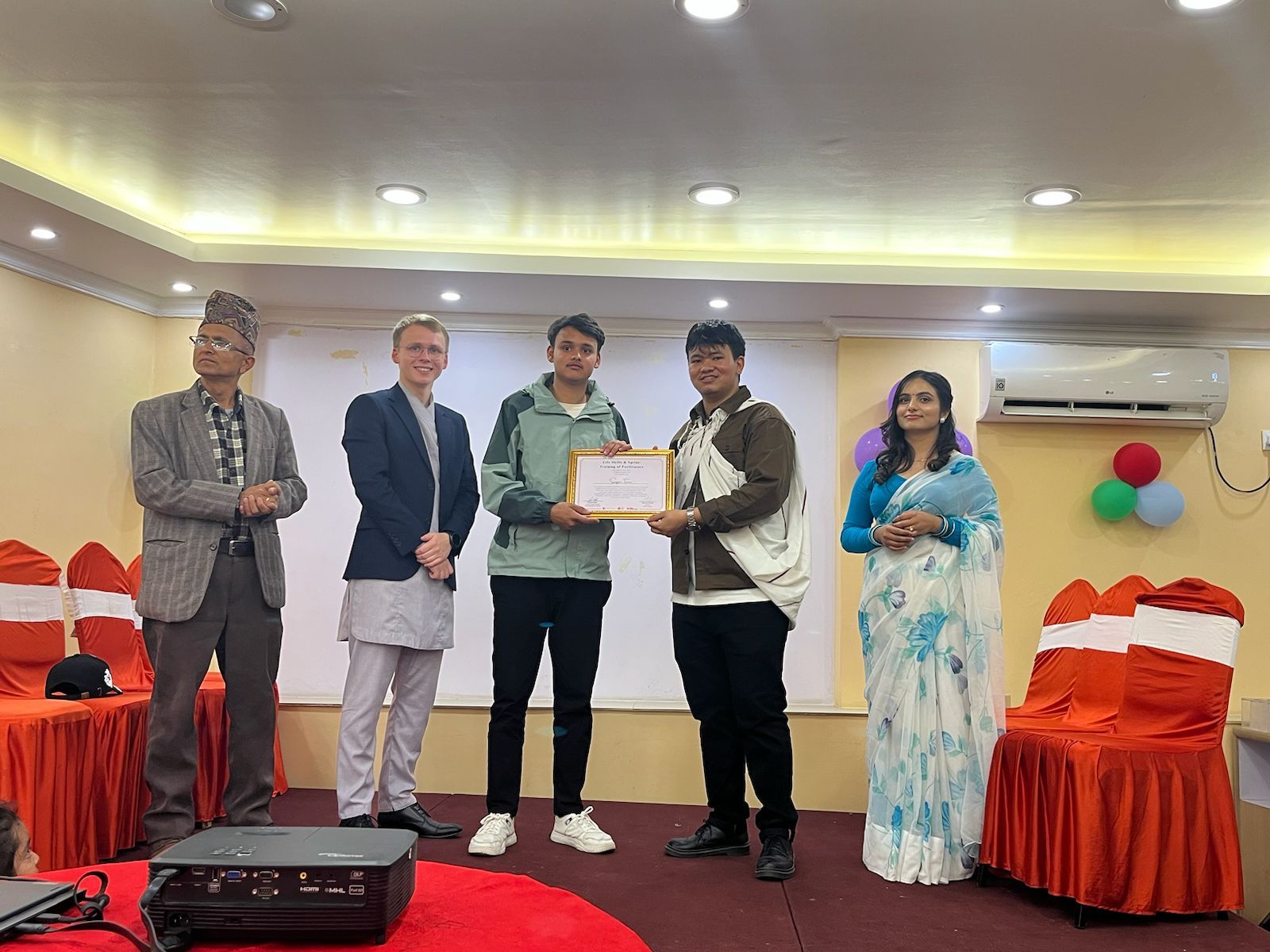
Youth leader in Nepal
2024-25 Six months with the Red Cross in Lamjung
From September 2024 to April 2025 I was an International Youth Leader Delegate in Lamjung District, Nepal, on YLEP2, a youth leader exchange between the Danish and the Nepal Red Cross. Four of us trained young people from schools and villages to run workshops for their peers, and helped them start 72 small projects of their own.
The project
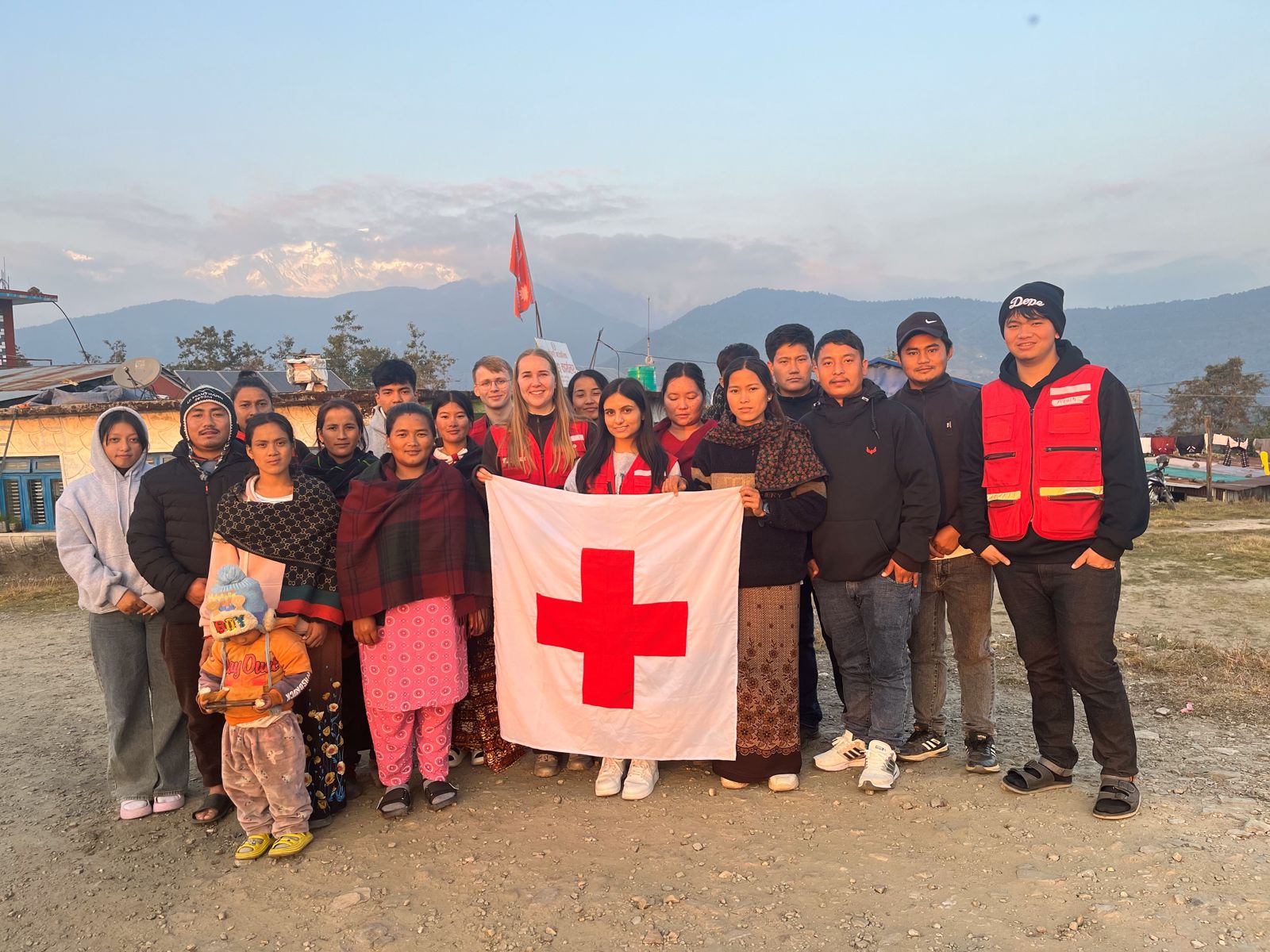
YLEP2 (Youth Leader Exchange Project 2) was the second round of a youth leader exchange between Danish Red Cross Youth and the Nepal Red Cross Society. It was the youth part of a bigger Danish Red Cross project in Lamjung called ICE (Inclusive and Resilient Community with Empowered and Engaged People), and was funded by the Danish Youth Council, DUF.
We were four youth leaders: Anna and me from Danish Red Cross Youth, and Deepika and Ayush from the Nepal Red Cross. Before leaving we had a week of training with Danish Red Cross Youth in Copenhagen and two weeks at DUF's youth leader seminar. We landed in Kathmandu at the end of September 2024 and lived in Besisahar, the district capital, until the end of March. We worked from the Red Cross district office there, as part of the office team.
Our job was to train local young people as peer facilitators, so they could run the workshops for their own classmates and neighbours, and to support them while they did. The idea is youth-to-youth: young people find it easier to open up to someone their own age than to a teacher.
Life Skills and Sprint
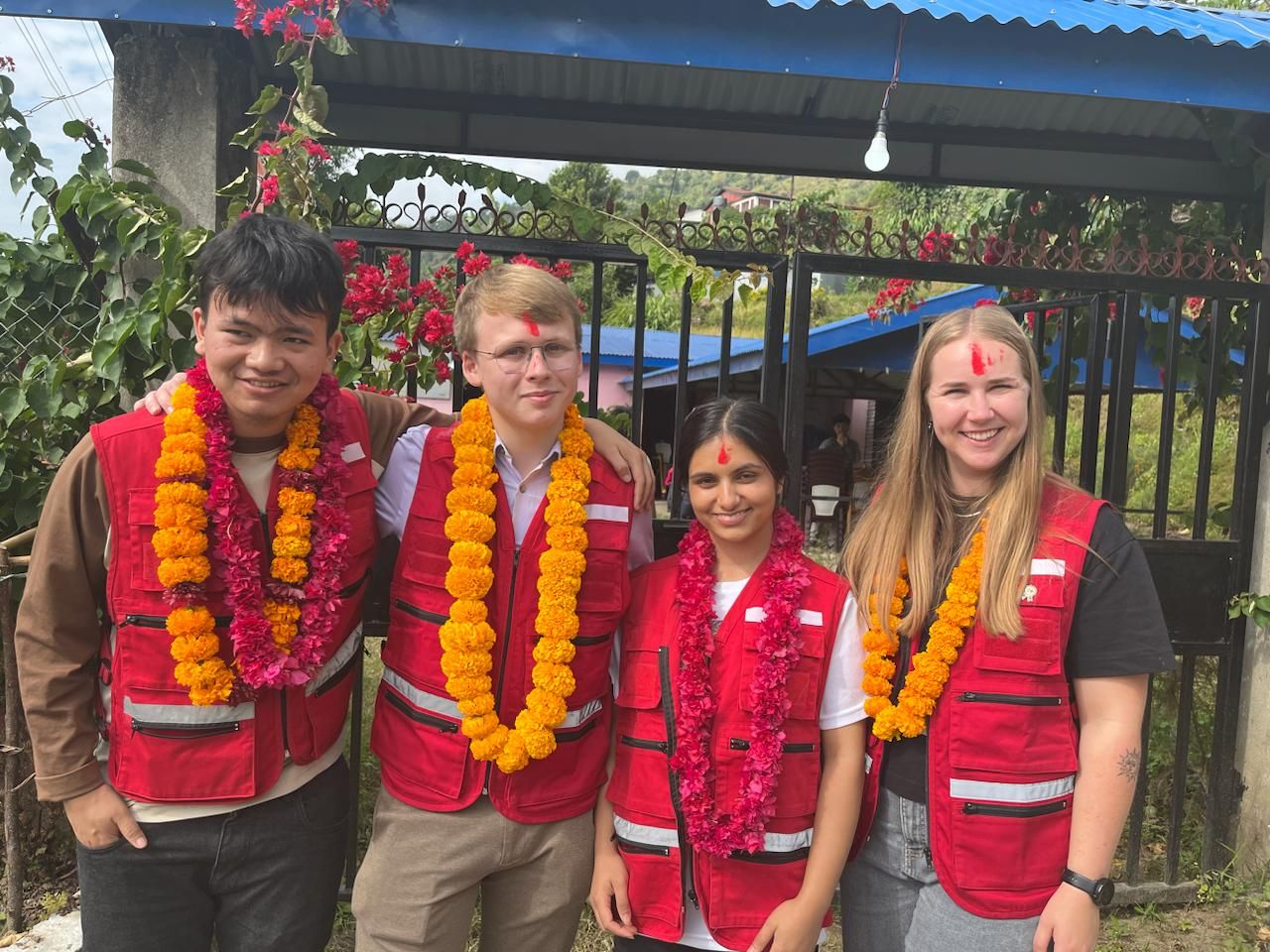
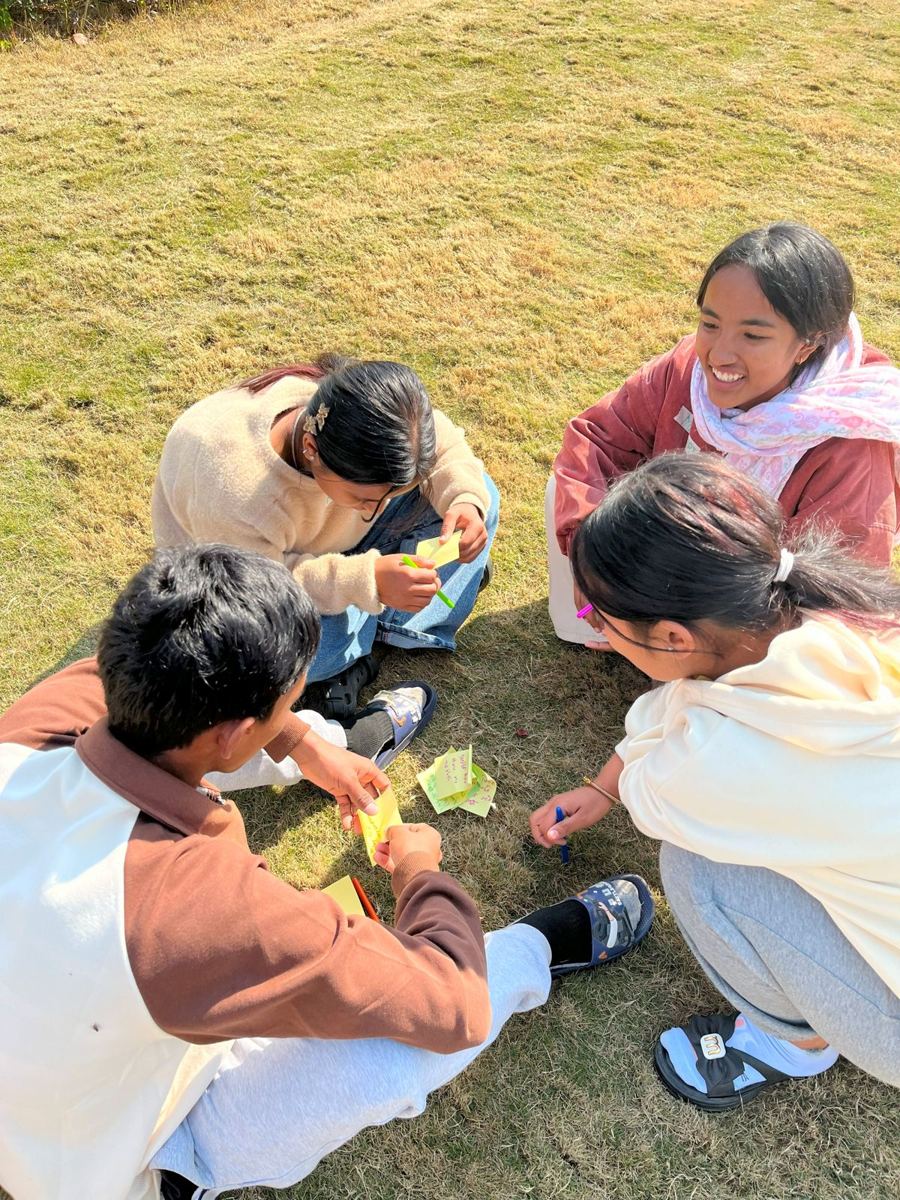
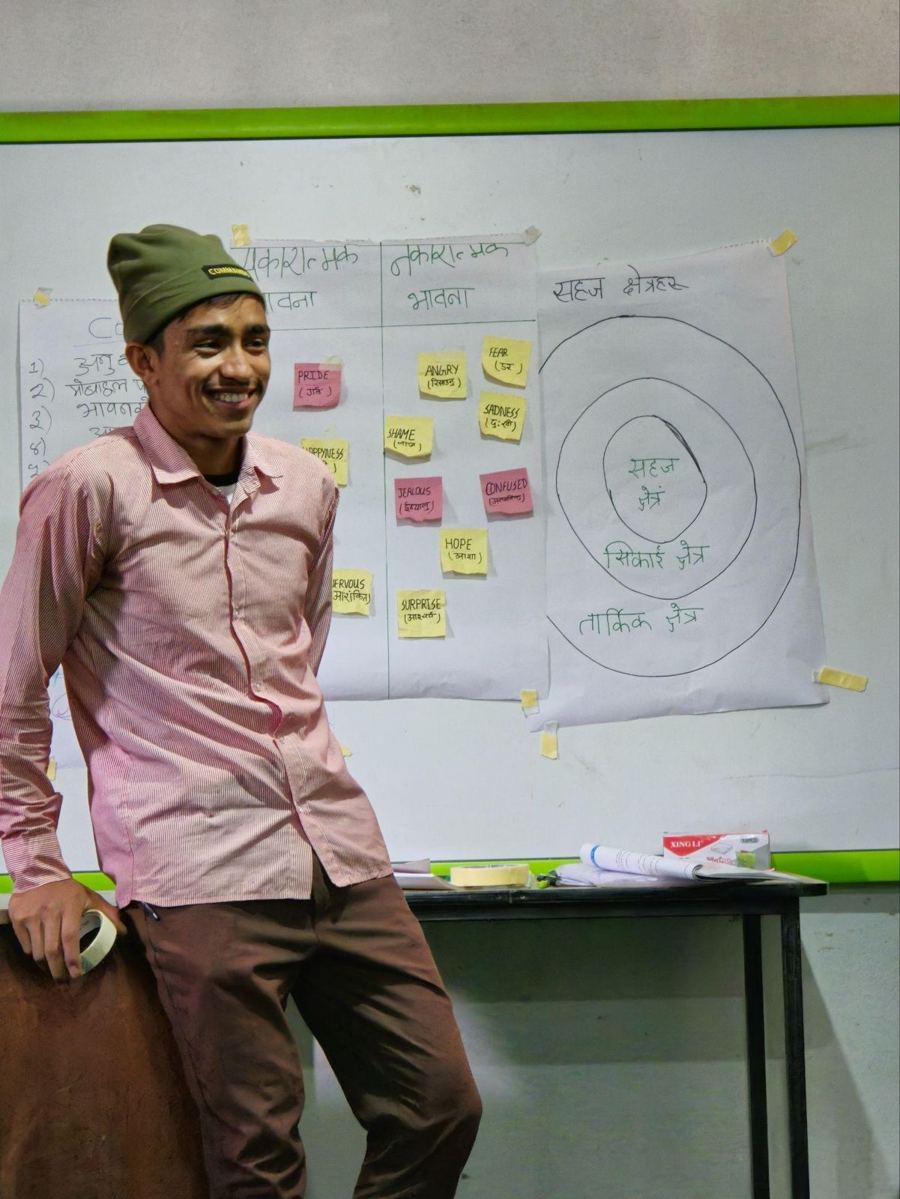
We worked with two methods from Danish Red Cross Youth. Life Skills is a set of exercises where young people reflect on themselves, their relations and their community: self-confidence, peer pressure, conflicts, emotions, planning their future etc. The Nepali manual has 28 exercises picked for youth in Lamjung, and every session starts by building a safe space where people can share without being judged.
Sprint is a one-day workshop in six stages, where young people find a problem in their own community, come up with a solution, test it on real people, plan it in milestones and present it. The best projects then got seed funding from the project.
Where we worked
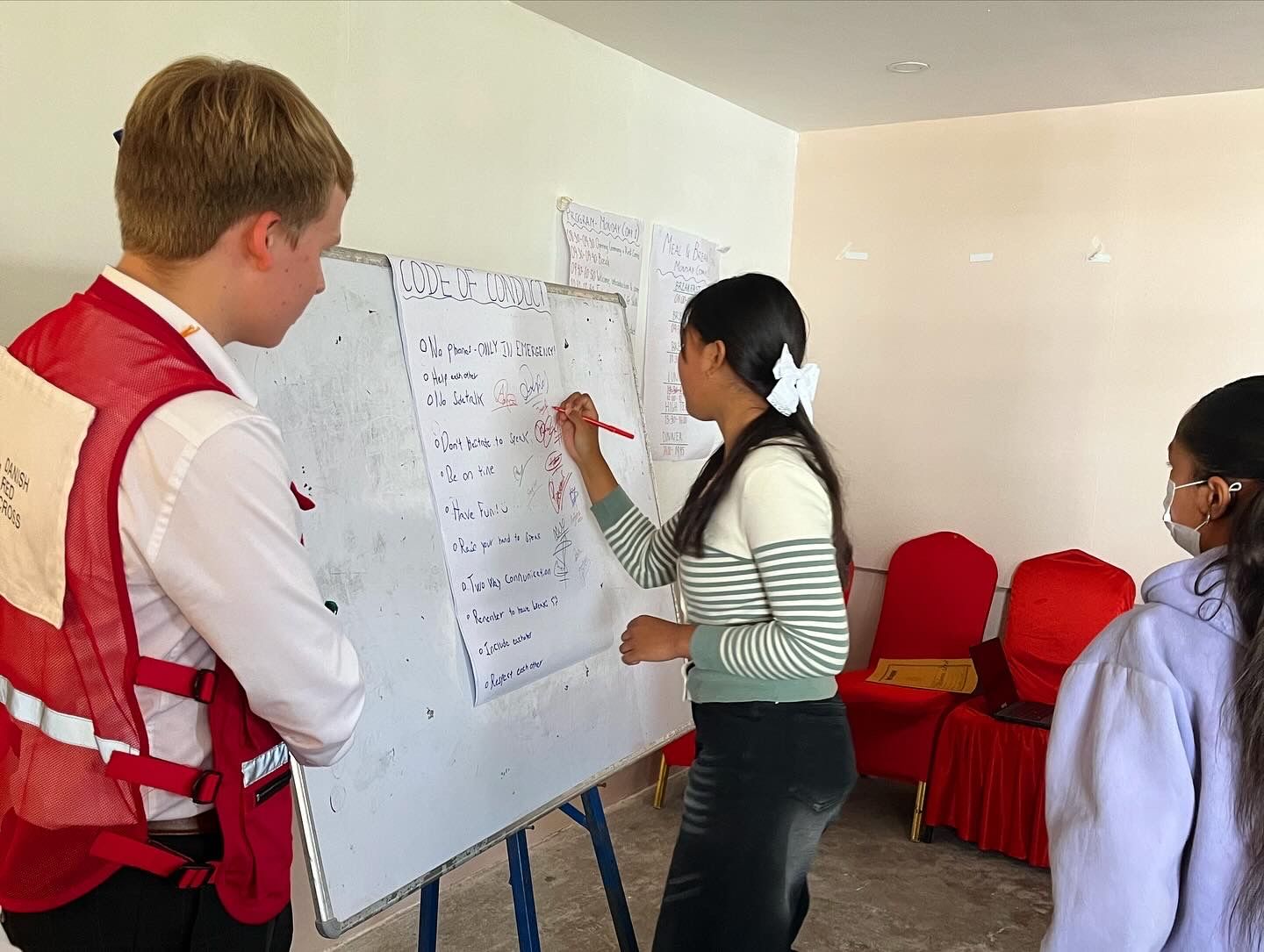
Besisahar is about six hours by car from Kathmandu. Two of the nine schools were in town, and most of the others were spread along the valley north and south of it. The furthest, Bageshwori, was up in Dudhpokhari, more than two hours away.
The four community groups lived in wards 1, 2, 3 and 5 of Dudhpokhari, a rural municipality up in the hills east of Besisahar, about three hours away on roads that got bad after rain. Most of the community youth were out of school and many were unemployed, so working with them was quite different from the schools.
- Schools: Adarsha Bal, Amar, Bageshwori, Bhakti Namuna, Bir Bhakti, Jana Bikash, Jana Kalyan, Marsyangdi Campus and Shailaputri Namuna
- Communities: the youth groups in wards 1, 2, 3 and 5 of Dudhpokhari
How the six months went
- October: The start was slow. Anna and I were admitted to hospital in the first week, the roads to Lamjung were bad, and two days after we finally got there we had to go back to Kathmandu to sort out our visas. Once in Besisahar, we did orientations at the schools and in the villages, where young people could volunteer as facilitators.
- November: Three Life Skills trainings for facilitators, each three days: two for the schools (16 and 20 participants) and one for the communities in Gauda (16).
- December and January: The facilitators ran their first Life Skills sessions with up to 20 peers each, and we split into two pairs to be there for the first two sessions at every school and ward. In total 65 sessions were held.
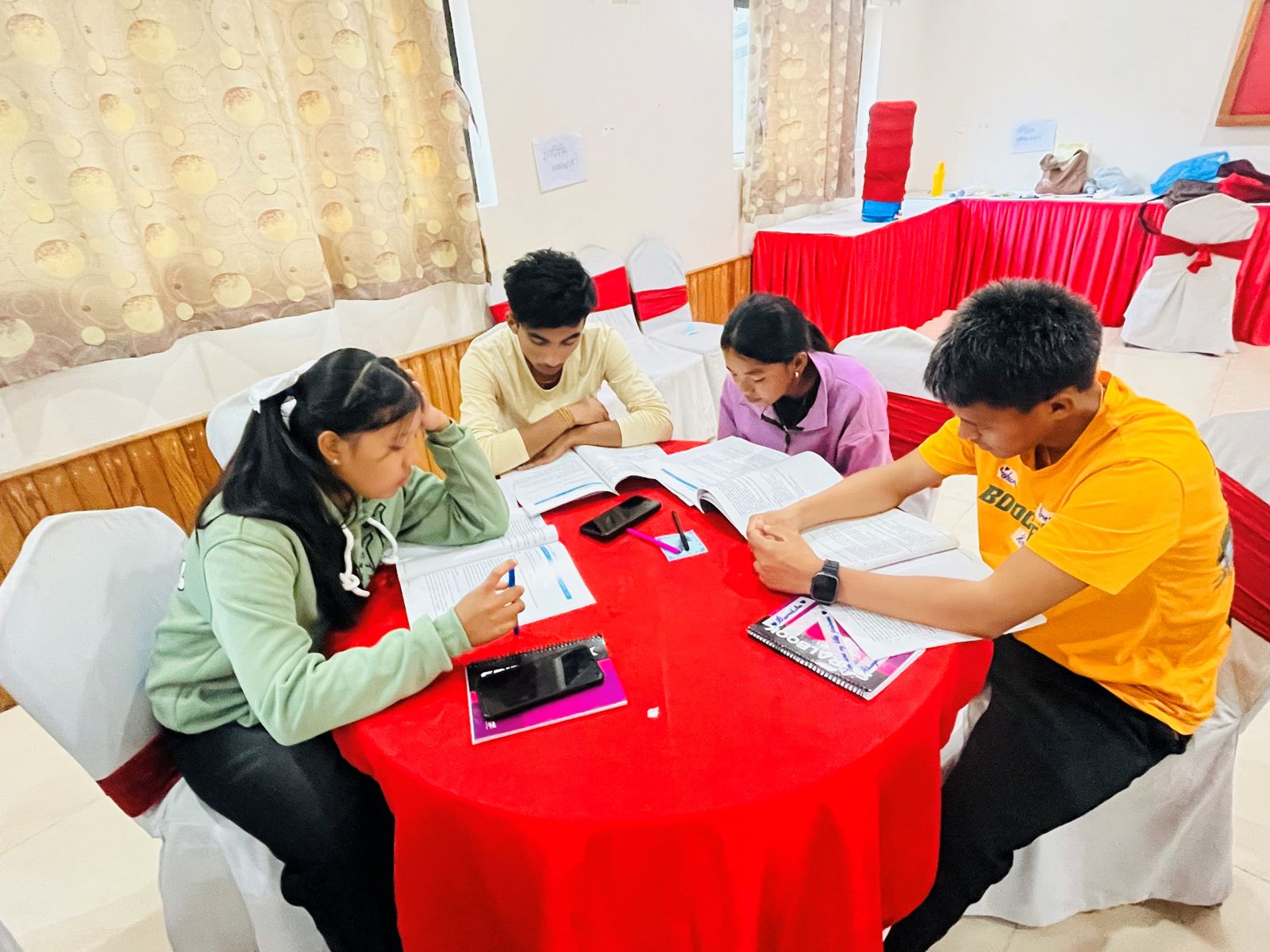
- December: A two-day workshop with 17 youth from the villages to rewrite the Sprint manual for them (see below).
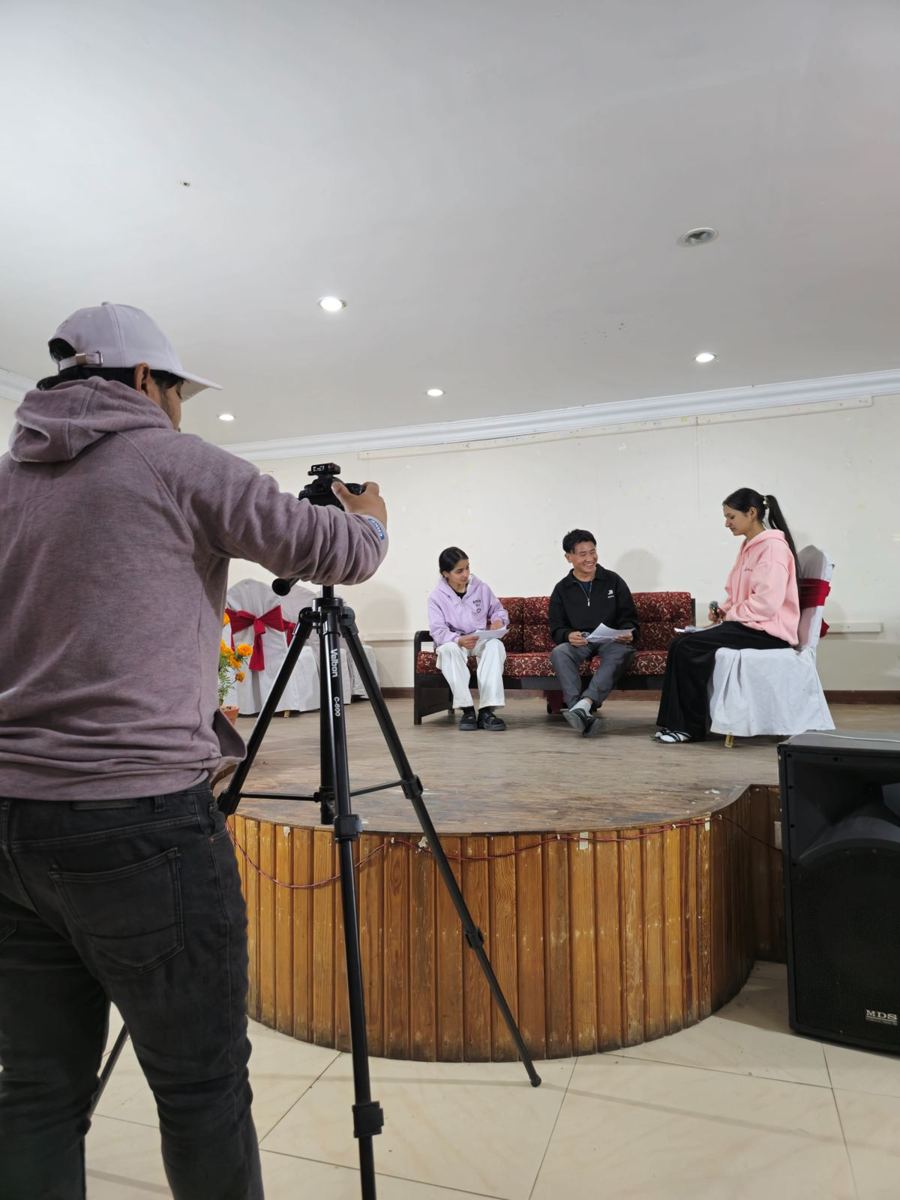
- January: Five days of filming training videos with a local videographer, and the first Sprint training for facilitators.
- February: Two more Sprint trainings, Sprint workshops at all nine schools, a monitoring visit from Danish Red Cross Youth, and a presentation at the district youth convention.
- March: Sprint workshops in the four wards, selecting the projects, a two-day training for 20 Red Cross staff, volunteers and teachers, and a farewell party with everyone at the end.
Rewriting Sprint for the villages
The first exchange in 2023 found that Sprint worked well in the schools, but not in the villages. The manual is built around groups making social projects, and expects people to read, write and draw. Many of the community youth struggle with that, they live far from each other, and what they actually needed was a way to earn money.
So we held a two-day workshop with 17 young people from four of the wards. On the first day we ran the stages as the manual describes them and stopped after each one to ask what was hard and why. In the evening we rewrote the first two stages to be individual instead of group based, and on the second morning we ran them again. That worked a lot better, and it decided the direction for the rest.
Afterwards we rewrote the whole manual around one person and one project, mostly something that brings in an income, with simpler wording, examples of realistic and unrealistic ideas, and other options than writing (draw it, say it, get help from your partner). Danish Red Cross Youth gave feedback on the draft, Deepika and Ayush translated it to Nepali, and we used it for the first time at the community Sprint training in February.
The projects
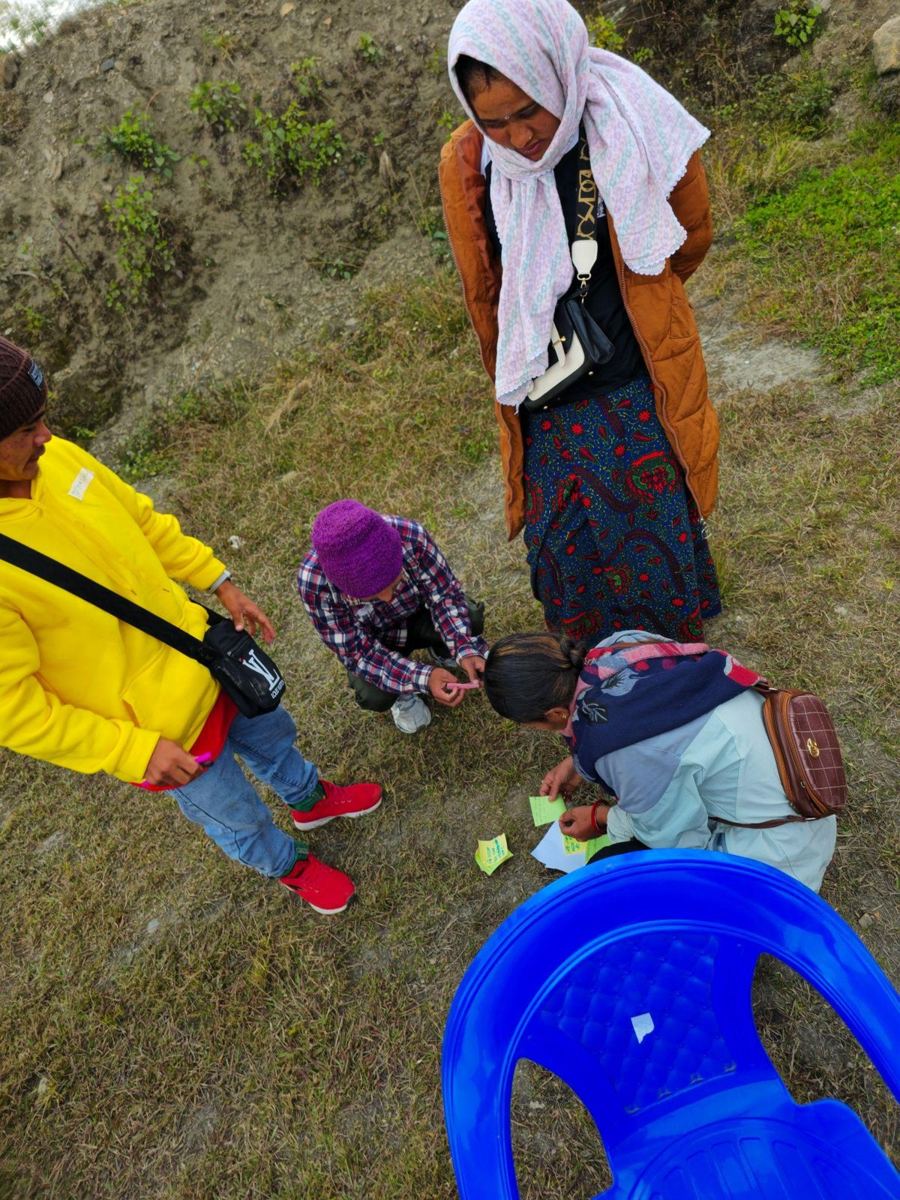
13 Sprint workshops gave around 90 project ideas. Together with the district office we selected 72 for seed funding, about 97,500 DKK (2.2 million Nepali rupees) in total, and everyone got a business training before the money was paid out.
The 17 school projects were made in groups of four to six, and were things like beekeeping, vegetable and coffee farming, a water tank with a filter for clean drinking water, a sanitary pad disposal machine for a school, new books for a library and awareness campaigns. The 55 community projects were individual, and almost all of them were small farms: goats, chickens, sheep or bees.
Results
- 52 young facilitators trained in Life Skills: 36 from 9 schools and 16 from 4 villages. 46 of them were also trained in Sprint. The plan was 39.
- 65 Life Skills sessions and 13 Sprint workshops, reaching more than 260 young people.
- 72 projects funded. The plan was 70.
- A Sprint manual rewritten for village youth, in English and Nepali.
- Footage for six training videos, five for Life Skills and one for Sprint, so new facilitators can learn the methods after we left.
- 20 Red Cross staff, volunteers and teachers trained in both methods.
What was hard
Plans changed all the time, often with very little notice, and after a while I started to see our monthly plans as a suggestion more than a plan. Some principals did not want sessions during school hours, and some teachers kept walking into sessions and broke the safe space the facilitators were trying to build. In the villages it took a long time before people saw us as more than visitors, and the facilitators there needed a lot more support.
We also lost most of October, and catching up meant very long days. During the trainings our days often ran past 14 hours. By January we had caught up, and in the end we finished more or less everything we were supposed to, plus a few extra tasks.
Jyoti's story
Part of the job was collecting stories from the young people we worked with. Jyoti was one of the peer facilitators from Jana Bikash School, and in this video she tells about being a facilitator.
What I took with me
Mostly leadership. We were trusted to plan and run most of the work ourselves, which also meant learning when to say no to a new request to protect the plan, and when the plan was the thing that had to change. I think I got quite good at balancing the two by the end. I also got a lot better at working in a team where people work very differently, and at getting things done in a big organisation with several offices involved.
And I became a much better facilitator. The best part, though, was the young people: seeing facilitators who could barely speak in front of others at the first training run a whole Sprint workshop on their own a few months later.
- "The Youth-to-Youth method really helped to motivate me since I could relate to the Youth Leaders and it's nothing like talking to a teacher." Anjana, peer facilitator, Jana Kalyan
- "Throughout my entire life, I will use the leadership skills I have learned." Rupesh, peer facilitator, Marsyangdi Campus